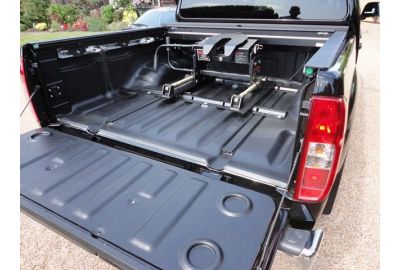
5th Wheel Hitch Buying Guide: What to Know First
Buying the right 5th wheel hitch starts with four things: your trailer weight, your truck’s towing setup, your bed length, and how often you tow. This 5th wheel hitch buying guide explains the main choices before you commit, so you can avoid fitment issues, clearance problems, or buying more hitch than your truck and trailer need.
Raven Truck Accessories carries 5th wheel hitches from CURT Manufacturing and supports towing accessory installation for Alberta truck owners. CURT offers several 5th wheel hitch styles, with weight ratings listed from 16,000 up to 30,000 pounds and mounting options that include traditional rails, custom brackets, and OEM puck systems.
Quick Takeaway: What Matters Most Before You Buy
| What to Check | Why It Matters |
|---|---|
| Trailer weight | The hitch must be rated for the loaded trailer, not just the empty trailer. |
| Truck towing capacity | Your truck must be rated to handle the trailer and pin weight. |
| Bed length | Short-bed trucks may need a sliding hitch for cab-to-trailer clearance. |
| Mounting system | Rails, custom brackets, puck systems, and adapters all affect fitment. |
| Hitch style | Different hitch designs focus on value, ease of use, weight, or heavier-duty towing. |
| Installation | Correct placement, hardware, and torque matter for safe towing setup. |
What Is a 5th Wheel Hitch?
A 5th wheel hitch is a heavy-duty towing hitch mounted in the bed of a pickup truck, usually over or near the rear axle. It connects to a 5th wheel trailer using a kingpin and hitch head instead of a rear bumper-style receiver.
The main benefit is stability. Because the connection point sits in the truck bed, a 5th wheel setup can provide a more settled towing feel than many bumper-pull trailer setups, especially with larger RVs and heavier trailers. CURT notes that 5th wheel and gooseneck hitches both mount in the truck bed over the rear axle, but 5th wheel hitches generally use a different coupling style and are commonly used for RV-style trailers.
For many Alberta truck owners, the goal is simple: tow a camper or trailer confidently without guessing at fitment, clearance, or hardware.
Why Your Trailer Weight Rating Comes First
The first step is matching the hitch rating to the trailer you actually tow. Do not choose a hitch based only on the trailer’s dry weight. Use the loaded trailer weight and confirm that the truck, hitch, mounting system, and trailer are all within their proper ratings.
Key terms to understand:
- GTW: Gross trailer weight, or the total loaded trailer weight.
- Pin weight: The portion of trailer weight carried in the truck bed.
- Towing capacity: The truck manufacturer’s maximum towing rating for that specific vehicle.
- Payload capacity: The weight the truck can carry, including passengers, cargo, hitch weight, and pin weight.
CURT lists 16K, 20K, 24K, and higher-capacity hitch options across its 5th wheel lineup. For example, CURT says its 16K hitches are tested and rated for 16,000 pounds GTW, while its 20K category is rated up to 20,000 pounds GTW.
That does not mean every truck should simply get the highest-rated hitch. A heavier-rated hitch may not be the right answer if the truck, trailer, mounting system, or towing needs do not call for it. The better approach is to confirm the whole towing setup.
Truck Bed Length: Fixed Hitch or Slider?
Bed length is one of the biggest buying decisions. A long-bed truck often has enough clearance for a fixed 5th wheel hitch. A short-bed truck may need a slider to create more space between the cab and trailer during tighter turns.
A fixed hitch keeps the hitch head in one position. It is usually simpler and is common on long-bed trucks or setups with enough turning clearance.
A sliding hitch moves the coupling point rearward when needed. CURT describes its sliders as providing 12 inches of rearward displacement to help with short-bed truck clearance during tight turns.
| Hitch Type | Best For | Key Trade-Off |
|---|---|---|
| Fixed 5th wheel hitch | Long-bed trucks and setups with adequate cab clearance | Less adjustable for tight turns |
| Sliding 5th wheel hitch | Many short-bed truck and trailer combinations | More parts, more weight, and more steps to use |
| Lightweight-style hitch | Customers who remove the hitch more often | Must still match trailer, truck, and mounting requirements |
| Higher-capacity hitch | Heavier trailer applications | Not a substitute for truck capacity or correct fitment |
The important point is not just whether the truck has a short bed. Trailer nose shape, pin box design, hitch position, and turning angle all affect clearance. That is why fitment help matters before buying.
Mounting Style: Rails, Puck Systems, and Custom Brackets
A 5th wheel hitch is only as useful as the mounting system underneath it. Before choosing a hitch head, confirm how it will mount into the truck.
Industry-standard base rails sit in the truck bed and provide mounting points for compatible 5th wheel hitch legs or sliders. CURT says its base rails are designed to bolt to under-bed brackets and accept CURT hitch legs or sliders, along with some competitor hitches that use industry-standard mounting points.
Custom 5th wheel brackets are designed for specific truck applications. CURT states that its custom brackets are engineered for particular trucks and can reduce installation time and required vehicle modifications compared with more universal approaches.
OEM puck systems are built into some newer pickup beds from the factory. CURT puck system legs or sliders are designed to drop into compatible factory puck systems using the truck’s existing mounting points.
The right choice depends on the truck. Some owners want a clean bed when the hitch is removed. Others care more about compatibility, cost, or working with an existing rail setup. This is where a vehicle-specific recommendation is more useful than a generic online answer.
CURT 5th Wheel Hitch Options Raven Customers May Consider
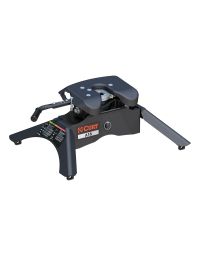
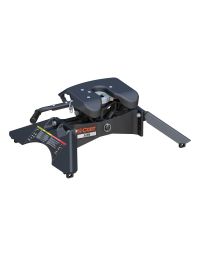
Raven carries 5th wheel hitches from CURT Manufacturing, and CURT’s lineup includes several series built around different towing preferences. CURT lists A-Series, PowerRide, CrossWing, and E-Series options on its 5th wheel hitch page, along with several mounting styles.
Here is a practical way to think about the lineup:
| CURT Hitch Series | Good Fit For | What to Confirm |
|---|---|---|
| CURT A-Series | Drivers wanting an articulating head design and user-friendly operation | Correct weight rating, mounting style, and truck fitment |
| CURT E-Series | Budget-conscious towing setups where the rating and fitment are appropriate | Trailer weight, bed length, and mounting compatibility |
| CURT CrossWing | Customers looking at a lighter-style 5th wheel hitch option | Trailer compatibility, rating, and installation requirements |
| CURT PowerRide | Heavier-duty towing applications where extra capacity may be needed | Truck capacity, trailer weight, and mounting system |
CURT also notes that its 5th wheel hitches are tested according to SAE J2638 specification. For a blog reader, the key takeaway is to compare more than the hitch name. The rating, head design, mounting system, truck bed length, and trailer all need to work together.
Fitment and Installation Questions to Ask First
A proper 5th wheel setup needs more than the hitch box. Before buying, ask these questions:
- What is the truck year, make, model, bed length, and drivetrain?
- Does the truck already have factory puck mounts?
- Does the truck have existing rails or brackets?
- What is the trailer’s loaded weight and pin weight?
- Is the trailer used occasionally, seasonally, or for long-distance travel?
- Does the truck need in-bed wiring for the trailer plug?
- Will the hitch need to be removed often for bed space?
- Does the truck need a brake controller or other towing accessories?
CURT’s installation overview shows that a rail-and-bracket installation can involve measuring, drilling, bracket placement, rail installation, hitch height measurement, and torqueing hardware. That is why many truck owners prefer professional installation, especially when the truck bed, frame brackets, wiring, and trailer height all need to be considered together.
Raven supports towing accessories, including 5th wheel hitches, hitch receivers, brake controllers, trailer locks, weight distribution systems, and gooseneck hitches. That makes it easier to look at the full towing setup rather than treating the hitch as a standalone part.
Alberta Towing Considerations
Alberta towing can involve long highway drives, changing weather, rough access roads, jobsite use, and seasonal RV travel. A good 5th wheel setup should suit how the truck is actually used.
For recreational towing, comfort, clearance, and ease of coupling matter. For work use, durability, secure setup, and keeping the truck functional day to day may be bigger priorities. For drivers who use the same truck for commuting, hauling, and weekend towing, removable components and bed space may also matter.
Winter and shoulder-season use are worth thinking about as well. Road grime, freeze-thaw conditions, and regular exposure to moisture can affect hardware over time. That does not change the basic buying process, but it does make correct installation, routine checks, and appropriate maintenance more important.
Which 5th Wheel Hitch Setup Makes the Most Sense?
The right setup is the one that matches your truck, trailer, and towing habits without creating avoidable clearance or installation problems.
Best for long-bed trucks: A fixed 5th wheel hitch may be the practical choice when cab clearance is not a concern.
Best for many short-bed trucks: A slider may be worth considering when extra turning clearance is needed.
Best for trucks with factory puck systems: A puck-compatible hitch setup can make installation and removal cleaner when the truck is properly equipped.
Best for heavier trailers: Start with the trailer’s loaded weight, then confirm truck capacity, payload, hitch rating, and mounting compatibility.
Best for customers who use the truck bed often: Ask about hitch weight, removal steps, rail height, and how much bed space remains when the hitch is out.
The main mistake is buying only by price or capacity. A hitch that fits the wrong mounting system or creates clearance issues is not a good value.
FAQ
Do I need a sliding 5th wheel hitch for a short-bed truck?
Many short-bed trucks need a sliding hitch, but not every setup is the same. Trailer front cap shape, pin box design, hitch position, and turning angle all affect clearance. A slider can move the coupling point rearward for tighter manoeuvring, but fitment should be confirmed before buying.
What weight rating should my 5th wheel hitch have?
Your hitch rating should meet or exceed the loaded trailer weight while also matching the truck’s towing and payload limits. Do not use trailer dry weight as your only number. Check the loaded trailer weight, pin weight, truck ratings, hitch rating, and mounting system rating together.
Can a 5th wheel hitch be installed in any pickup truck?
No. The truck needs the right towing capacity, payload capacity, bed configuration, and compatible mounting system. Some trucks also require vehicle-specific brackets, rails, puck-system legs, wiring, or other towing components. Always confirm fitment for the exact year, make, model, and bed length.
Is a 5th wheel hitch better than a gooseneck hitch?
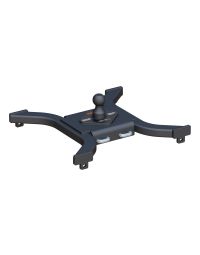
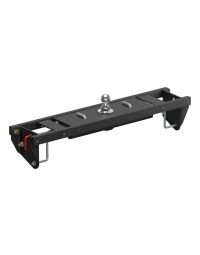
A 5th wheel hitch is often preferred for larger RV-style trailers because the coupling design can provide smoother, stable towing. A gooseneck hitch is common for some work and livestock-style trailers and can leave more bed space when removed. The better option depends on the trailer.
Should I install a 5th wheel hitch myself?
Some experienced owners install their own hitches, but installation can involve measuring, drilling, brackets, rail placement, hitch height, wiring, and torque specifications. Professional installation is a practical choice when you want the truck, hitch, and trailer setup checked together before towing.
Final Thoughts
A 5th wheel hitch is not a one-size-fits-all truck accessory. The right choice depends on trailer weight, truck capacity, bed length, mounting style, and how the truck is used when it is not towing.
For Alberta truck owners, the smartest approach is to confirm fitment first, then compare hitch series, weight ratings, and installation options. Raven Truck Accessories carries CURT 5th wheel hitches and can help customers look at the full towing setup before choosing a hitch.
Need help choosing a 5th wheel hitch for your truck and trailer? Contact your nearest Raven Truck Accessories location for fitment help, installation options, and a quote on CURT 5th wheel towing accessories.